
In the complex landscape of occupational health and safety, managing the Single Risk Assessment Document (DUERP) is paramount. Often viewed by management as an administrative burden, these documents are actually the foundation of any successful prevention policy. For HSE, QHSE, and HR departments, centralizing and updating these documents can be extremely time-consuming, especially when relying on static formats like paper or Excel spreadsheets.
For several years, regulations have been evolving and retention requirements have become stricter, making document management increasingly complex without the right tools. Given these challenges, transitioning to digitized single risk assessment documents is no longer an option, but a strategic necessity to ensure compliance and employee safety.
So, how does the Deemply tool transform this obligation into a performance driver?
Single risk assessment documents: Essential pillars of prevention
Before diving into digital transformation, it is essential to review the fundamentals governing single risk assessment documents.
What is the DUERP?
The Single Risk Assessment Document is mandatory for any company with at least one employee, regardless of its sector or legal structure. Established by the decree of November 5, 2001, it consolidates the results of health and safety risk assessments for workers.
The law of August 2, 2021, known as the "Occupational Health Law," reinforced its importance by emphasizing the traceability of exposures. Single risk assessment documents are no longer just simple lists; they have become a reflection of the company's safety culture.
The primary objectives of single risk assessment documents
The primary goal of these documents is not to satisfy a labor inspector during an audit, but to protect people. Single risk assessment documents serve to:
- Identify hazards: Create an exhaustive inventory of risks (physical, chemical, etc.).
- Prioritize risks: Evaluate frequency and severity to rank actions.
- Plan prevention: The analysis allows for the implementation of an Annual Occupational Risk Prevention and Working Conditions Improvement Plan (PAPRIPACT) or a list of preventive actions.
Retention periods and archiving: What the law says
This is where single risk assessment documents become a problem for many companies still using paper. Since July 1, 2022, single risk assessment documents and their successive versions must be kept for a minimum of 40 years. With paper and Excel files, this is often very difficult because items get lost or damaged, making it impossible to provide justification when needed.
This measure was not implemented without reason; the goal is to enable the long-term traceability of occupational exposures, particularly for late-onset diseases. Employers must also make these versions available to former employees and health authorities.
Penalties for non-compliance
Failure to update or create your risk assessment documents exposes the company to serious risks:
- Criminal penalties: A fine of €1,500 per work unit (doubled in the event of a repeat offense).
- Inexcusable fault: In the event of a workplace accident or occupational disease, the absence of an up-to-date risk assessment document (DUERP) makes it easier to establish the employer's inexcusable fault, leading to significant civil damages.

How digital technology is revolutionizing document management
Managing risk assessment documents on Excel or paper has become an impossible task for modern QHSE professionals. Digitalization provides a concrete solution to real-world challenges.
Finally, a collaborative document
The days of the safety manager filling out the document alone in their office are over. Digital tools make it possible to involve frontline managers, CSE members, and the employees themselves. By sharing access to risk assessment documents, information is reported in real time, ensuring an assessment that truly reflects workplace reality.
Field usage
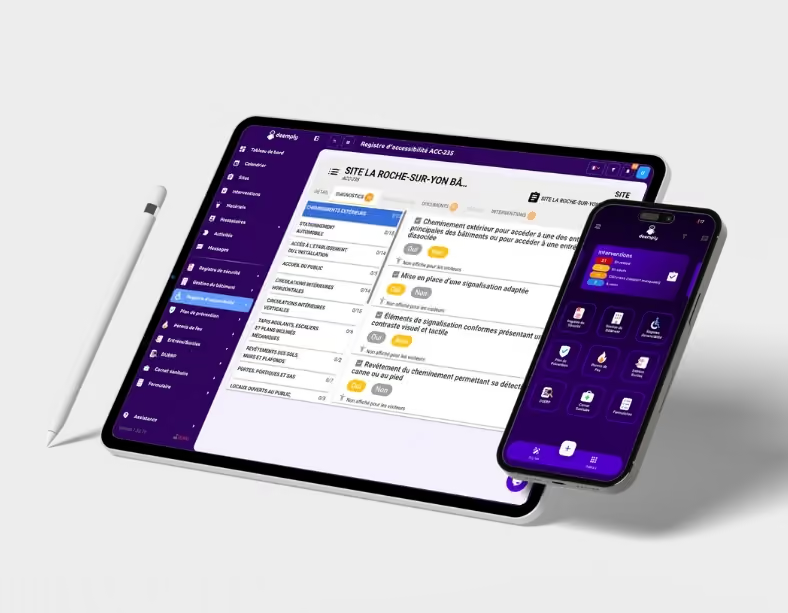
Risk cannot be diagnosed from behind a screen. Thanks to mobile solutions, HSE experts can walk through workshops or construction sites with a tablet. They can take photos, note hazardous situations, and update risk assessment documents instantly. This responsiveness is the key to dynamic prevention.
Automation and alerts
The legal framework requires an annual update (for companies with more than 11 employees) and whenever there is a significant change to workstations. With a digital tool, automated reminders are sent to the relevant managers. You no longer scramble to meet deadlines—you manage them, all while ensuring you meet your obligations.
Save administrative time to spend more time in the field
An HSE manager spends an average of 30% of their time consolidating data in Excel. Digitalizing your risk assessment documents means automating formatting, generating the PAPRIPACT, and tracking progress. This saved time is reinvested where it adds the most value: supporting teams in the field.

Deemply, your partner for risk assessment documents
Faced with these challenges, Deemply stands out as an intuitive solution designed for professionals who want to turn regulatory requirements into an opportunity. All features of the module have been designed to adapt to your needs.
Simplified document creation and updates
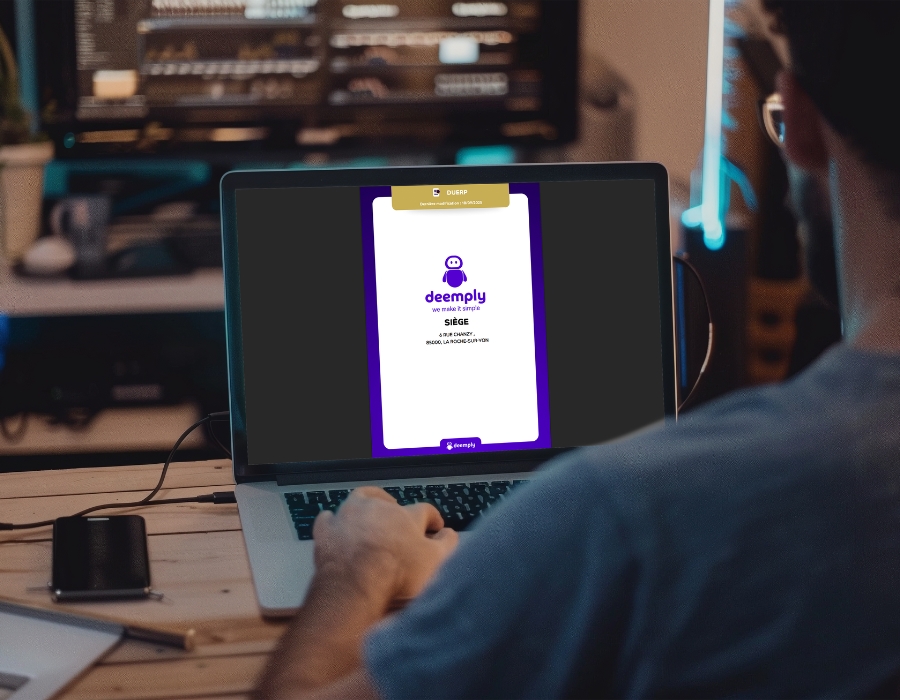
At Deemply, we offer a seamless interface that guides you through the assessment. No more illegible spreadsheets. Creating your risk assessment documents becomes a logical process, structured by work units, work phases, risks, damages, preventive measures, scoring criteria, and ratings. The downloadable PDF, accessible as soon as you have entered your data, retains all your information and the color coding you have defined. Everything becomes clear and easy to read, allowing you to take the necessary actions without having to spend hours searching for information.
Real-time updates
Whenever you need or want to, you can update your documents without having to go to your office. You can refresh information directly from your phone. Your risk assessment documents are no longer static files that you only pull out once a year, but living tools that reflect your company's current safety status.
Mobile accessibility
Whether you are on the move or conducting an inspection, your data stays with you. Our tool's multi-device accessibility allows you to view your risk assessment documents from anywhere, making impromptu audits or quick safety briefings with staff easy. With Deemply, your information is available everywhere, all the time, on any device.
Simplified action plan tracking
The DUERP is only useful if it leads to actions that reduce risk. Within the features available for your risk assessment documents, you will find an "Actions" tab that allows you to manage identified risks and take the necessary steps to reduce or eliminate them. You can assign owners, set deadlines, and track overall progress at a glance. This is the end of action plans that get lost in a drawer.
Secure archiving
To meet the 40-year retention requirement, you can store every successive version of your documents. In the event of an audit or dispute, you can retrieve the complete history in just a few clicks, ensuring total peace of mind when dealing with authorities.
Simplified team collaboration
The HR and HSE departments are finally speaking the same language. By centralizing information on a single platform, internal communication is streamlined. Deemply is multi-user. For every account created, you can define permissions: view, edit, and delete. This ensures that everyone has access to what they need and that those working on your risk assessment documents can collaborate effectively.
Conclusion: Turning a "compliance burden" into a performance tool
Your risk assessment documents should no longer be seen as a burden, but as the GPS for your company's safety. While legal requirements remain the trigger, the benefits of digital management with a tool like Deemply go far beyond simple compliance.
By adopting a modern, collaborative, and mobile approach, you not only reduce the risk of workplace accidents, but you also improve employee engagement and your company's brand image.
Ready to turn your risk assessment documents into real performance drivers? Schedule your free demo with our team.
Switch to paperless compliance
Safety register, DUERP, health booklet: the Deemply ecosystem centralizes your regulatory obligations and alerts you before deadlines.
.avif)

Good to know
Replace this text with the information you want to highlight.
Bon à savoir
Remplacez ce texte par l’information à mettre en avant.