The hot work permit is a document that affects many establishments; it is essential for ensuring safety during work involving hot spots. Yet, it is often misunderstood by many business owners, despite being mandatory in a wide variety of situations. In this article, we will help you decipher how this document works, its legal requirements, the parties involved, and the benefits of digitalization for optimizing its management.
What is a hot work permit?
The hot work permit is a mandatory document that serves as a request to carry out work likely to generate risks of explosion or fire. It aims to prevent incidents and accidents with the primary goal of protecting people, property, and the environment. The hot work permit also serves as a traceability record and attests that safety measures were implemented before work began and were respected during its execution.
Who is affected by the hot work permit?
French law requires many types of establishments to hold a hot work permit when carrying out work in their buildings. Here is the list of categories concerned and the legislation that mandates it:
Public Access Buildings (ERP)
These establishments include, for example, hotels, hospitals, or even shopping centers. They must comply with the Order of June 25, 1980, approving the general provisions of the fire and panic safety regulations for public access buildings, and more specifically Article PS 28, which provides for the following measure: “All repair or development work leading to an increase in risk (use of a flame or heat source, purging of circuits, etc.) shall only be carried out after the issuance of written authorization and, if necessary, a hot work permit drawn up and signed by the operator or the person they have specifically designated. When the work is carried out by an external company, these documents are recorded by the operator and the external company or the persons they have specifically designated.”
Installations Classified for Environmental Protection (ICPE)
These are governed by Article 24 of the Order of November 26, 2012, relating to general requirements applicable to installations subject to the registration regime under heading no. 2251 (preparation and packaging of wine) of the nomenclature of installations classified for environmental protection. It states: “In the parts of the installation identified in Article 8, and in particular those identified as fire-risk premises defined in Article 11.2, repair or development work may only be carried out after the issuance of an ‘intervention permit’ (for work without flames or heat sources) and, if necessary, a ‘hot work permit’ (for work with a heat source or flame) and in compliance with specific instructions. These permits are issued after an analysis of the risks associated with the work and the definition of appropriate measures.
The ‘intervention permit’ and, if applicable, the ‘hot work permit’ and the specific instructions are drawn up and signed by the operator or a person they have specifically designated. When the work is carried out by an external company, the ‘intervention permit’ and, if applicable, the ‘hot work permit’ and the specific instructions relating to the safety of the installation are signed by the operator and the external company or the persons they have specifically designated.
In parts of the installation presenting fire or explosion risks, it is forbidden to bring in fire in any form, except for the execution of work that has been the subject of a ‘hot work permit.’ This prohibition must be displayed in clear characters.”
This obligation is particularly aimed at sensitive facilities such as chemical plants or warehouses, as fires could have devastating consequences.
Establishments Receiving Workers (ERT)
The Order of March 19, 1993, establishing the list of personal protective equipment subject to the general periodic inspections provided for in Article R. 233-42-2 of the Labor Code and Article R4512-7 define the obligation to hold a hot work permit for all interventions taking place in work areas presenting fire risks. This measure is part of the overall approach to preventing workplace accidents.
High-Rise Buildings (IGH)
The Order of December 30, 2011, establishing safety regulations for the construction of high-rise buildings and their protection against fire and panic risks, and more specifically Article GH 3, provides the following definition and obligation: “Hot work permit: a document authorizing the execution of work involving hot spots. Its purpose is to take all preventive measures against fire or explosion risks during work and to define the means and measures necessary to prevent and fight any outbreak of fire that may occur during such work. The hot work permit is signed by the project owner or their qualified representative, a representative of the fire safety service (SSIAP 2 minimum), and the operator. A copy is given to each signatory. The validity of the hot work permit is specified; it is limited to one day or one operation. In the latter case, the maximum duration of validity is five days, after which the hot work permit must be renewed.”.
Due to their size, these buildings present specific challenges and risks regarding fire safety. These specificities make the hot work permit essential for minimizing risks.
Who is responsible for drafting the hot work permit?
As this document is mandatory, it must strictly adhere to certain requirements during its creation. To begin with, it must be drafted by a competent and trained person. They must indeed have knowledge of the risks associated with hot work. They must also be aware of the risks related to the company and be able to recommend and implement preventive measures.
As a reminder, hot work refers to all tasks involving assembly operations (welding), disassembly (cutting), and material removal operations (grinding, deburring). Examples include:
- Electric arc or oxy-fuel welding
- Oxy-fuel cutting
- Cutting and grinding with chainsaws, sanders, and grinders
These are therefore all tasks capable of emitting flames, heat, sparks, or spreading fire throughout the facility.
Who signs the hot work permit?
There are two main parties involved in signing this regulatory document:
- The host company : This is the company where the work will be carried out; it is the client. The signatory is generally the site manager or the project owner.
- The external company : This is the service provider, the one performing the work. For them, there may be multiple signatories depending on the number of personnel involved.
The document may also contain general instructions. Here are some examples of general instructions that can be implemented in the facility:
- Conducting a preliminary inspection of the work area to detect flammable materials.
- Placing fire extinguishing equipment in the immediate vicinity of the work.
- Continuous monitoring after the work is completed to detect any potential hot spots.
Why choose a digital hot work permit?
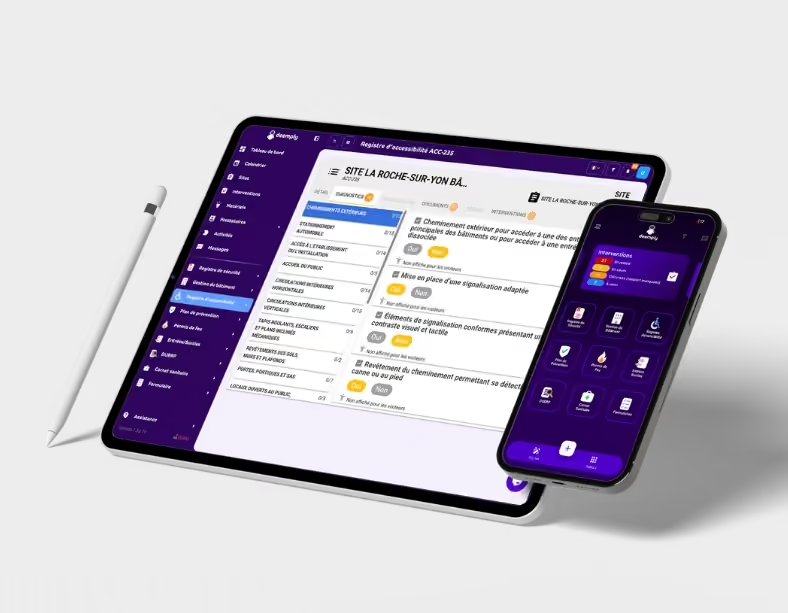
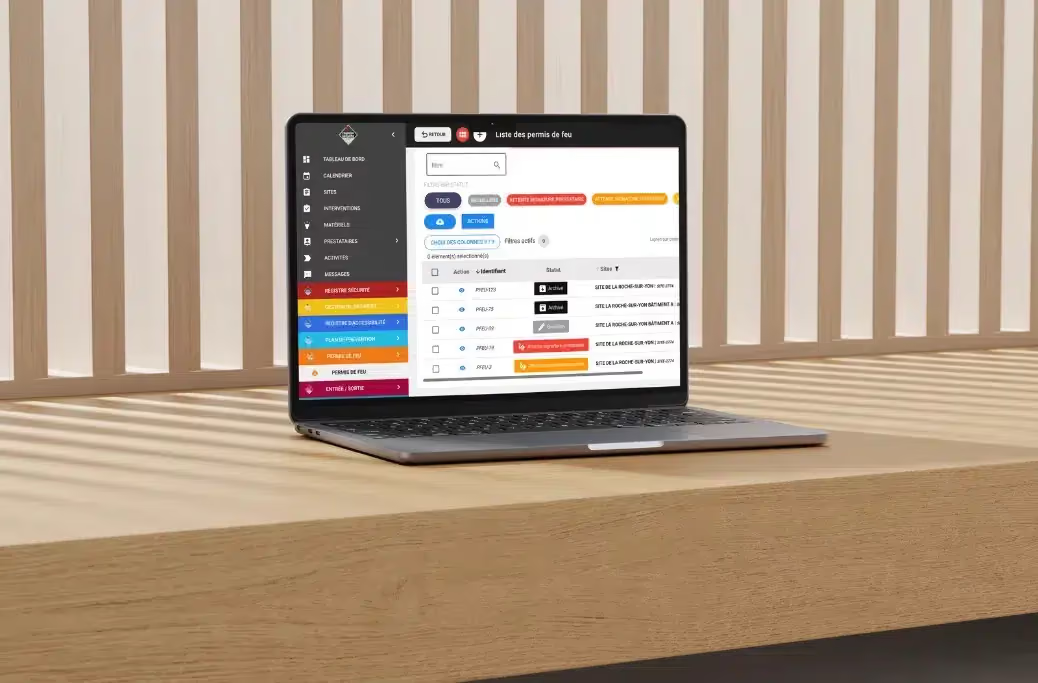
By digitizing your hot work permit, you will save time in preparing your documents. You will significantly reduce your administrative burden. With the Deemply solution, you can create, sign, and manage your hot work permits. At a glance, you will be able to see the status of your permits. You can also follow up with your contractors who have not yet filled out or signed the document.
Thanks to our mobile app, you can sign documents on the go. Among the many features available, you can, for example, record the final safety check with your contractor on-site once the work is completed.
The alerts and notifications will keep you informed of the progress of your documents. You won't miss any information regarding the safety status of your facilities that have active hot work permits.
To simplify your daily routine, our solution provides you with templates that can be used indefinitely to create your hot work permits. You can customize these templates with the specific requirements of your facilities. You also have the option to create your documents from scratch. Our solution adapts to all your needs and is fully customizable.
A hot work permit is much more than just administrative paperwork. It is an essential tool for ensuring safety during high-risk tasks. Implementing it rigorously, combined with digital solutions, helps protect your teams and facilities while ensuring compliance with current regulations. Investing in an effective hot work permit system means investing in the safety and long-term success of your business.
Switch to paperless compliance
Safety register, DUERP, health booklet: the Deemply ecosystem centralizes your regulatory obligations and alerts you before deadlines.
.avif)

Good to know
Replace this text with the information you want to highlight.
Bon à savoir
Remplacez ce texte par l’information à mettre en avant.